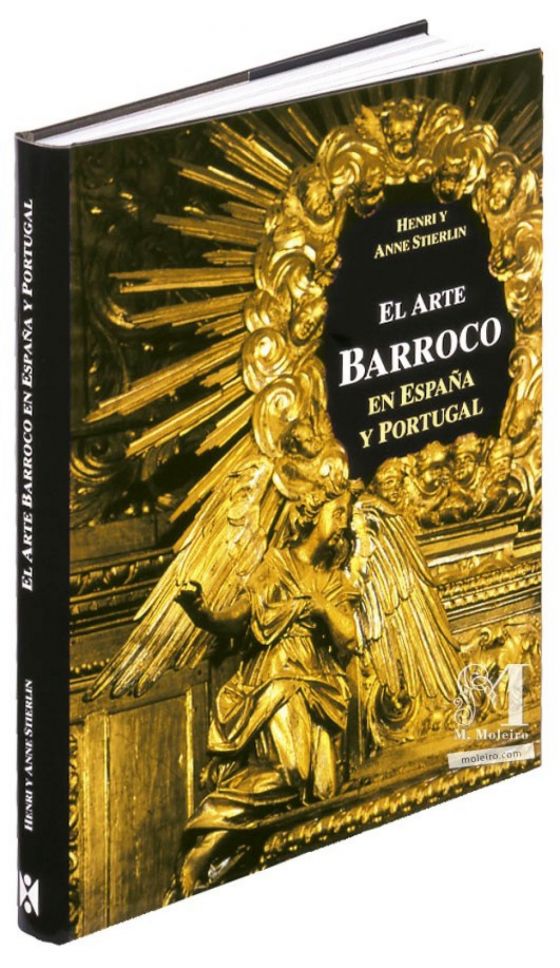
_7.jpg "El Arte Barroco en España y Portugal Henri y Anne Stierlin")


See more reviews
()

+ 21
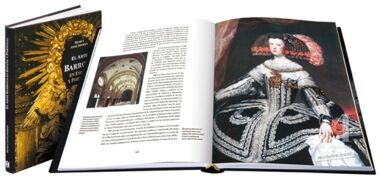
On the eve of colonial expansion, the Iberian Peninsula became part of a great artistic movement characterised by an overwhelming lavishness and overpowering decoration culminating in disproportionate excesses. A profusion of ornamentation that apparently thrived on its own exaltation.
An art form taking the mystic raptures embodied in the writings of St John of the Cross and St Teresa of Avila to a state of paroxysm. The trends of the times of Isabel and Manuel taking the flamboyant style typical of all Gothic Europe to its final consequences and lusty churrigueresque and rococo art both conveyed the characteristic genius of Spain and Portugal with great ostentation. Nourished by the wealth of the New World, that movement was to enable and produce countless masterpieces from the late 15th to the dawn of the 19th century.
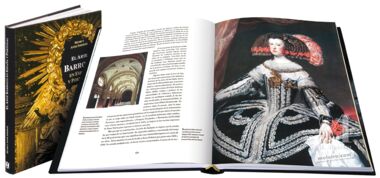
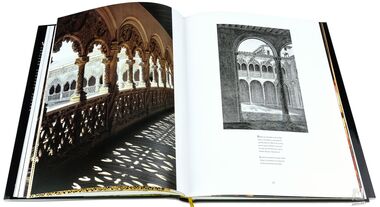
Baroque Art in Spain and Portugal reveals the consequences of the Great Discoveries and the affluence of riches from the New World upon the architecture and art of the Iberian Peninsula in the three centuries following Columbus’s discovery (16th – 18th C.). Plateresque and Mudejar Spain, the Golden Age, Spanish and Portuguese Baroque and, finally, the religious enthusiasm of Ultra-Baroque art, are all analysed and illustrated in this beautiful book.
Read more
Read less

On the eve of colonial expansion, the Iberian Peninsula became part of a great artistic movement characterised by an overwhelming lavishness and overpowering decoration culminating in disproportionate excesses. A profusion of ornamentation that apparently thrived on its own exaltation.
An art form taking the mystic raptures embodied in the writings of St John of the Cross and St Teresa of Avila to a state of paroxysm. The trends of the times of Isabel and Manuel taking the flamboyant style typical of all Gothic Europe to its final consequences and lusty churrigueresque and rococo art both conveyed the characteristic genius of Spain and Portugal with great ostentation. Nourished by the wealth of the New World, that movement was to enable and produce countless masterpieces from the late 15th to the dawn of the 19th century.
Baroque Art in Spain and Portugal reveals the consequences of the Great Discoveries and the affluence of riches from the New World upon the architecture and art of the Iberian Peninsula in the three centuries following Columbus’s discovery (16th – 18th C.). Plateresque and Mudejar Spain, the Golden Age, Spanish and Portuguese Baroque and, finally, the religious enthusiasm of Ultra-Baroque art, are all analysed and illustrated in this beautiful book.
Authors: Henri and Anne Stierlin
Size: 250 x 320 mm
Pages: 208
Illustrations: 167
Language: Spanish
ISBN: 978-84-88526-04-5
TABLE OF CONTENTS:
Un mensaje de exaltación
Los últimos fulgores góticos
La España plateresca y mudéjar
La apoteósis del Siglo de Oro
Felipe II y el palacio de El Escorial
En el corazón del Barroco español
Pompa lusa y Barroco internacional
El entusiasmo religioso del Ultrabarroco
Mapa
Glosario



Authors: Henri and Anne Stierlin
Size: 250 x 320 mm
Pages: 208
Illustrations: 167
Language: Spanish
ISBN: 978-84-88526-04-5
TABLE OF CONTENTS:
Un mensaje de exaltación
Los últimos fulgores góticos
La España plateresca y mudéjar
La apoteósis del Siglo de Oro
Felipe II y el palacio de El Escorial
En el corazón del Barroco español
Pompa lusa y Barroco internacional
El entusiasmo religioso del Ultrabarroco
Mapa
Glosario