DICCIONARIO_dic_inicio
telefono
+34 93 240 20 91

The most prestigious company specialised in the identical reproduction of illuminated manuscripts and atlases
 
folio 2v
folio 5r

The physician, poet and grammarian, Nicander of Colophon, lived in the 2nd century BCE, in the court of Attalus III, king of Pergamum. His Theriaka concerns the bites of poisonous insects, snakes and wild animals, and his Alexipharmaka, other poisons of plant and mineral origin along with the necessary precautions and appropriate antidotes. His magic formulae consisting of 50 - 60 substances were increased by Mitridates, above all with the addition of opium and aromatic herbs, and by Crito, Trajanus’s physician, and particularly Andromache, Nero’s physician.

The extant writings in this Parisian manuscript are two poems belonging to what is known as the didactic genre characterised by having a scientific content made more understandable (or at least easier to remember) by being in verse. The Theriaka are useful information about dealing with poisoning caused by snakes, scorpions and other sea, air and land animals with a poisonous bite or sting. This information can be divided into three main categories: the physical and ethological description of the poisonous animals, the symptoms of their bites and stings, and finally remedies for poisoning.

The Alexipharmaka consist of 630 verses about twenty-one oral poisons (unlike those in the Theriaka absorbed through the skin) of all types: animal, vegetable and mineral. They are studied on the basis of the specificity of their toxic effects and, therefore, of their remedies. The Alexipharmaka are well structured, there being a systematic, three-part entry on each poison: the physical description of the solution in which the poison was mixed, the symptoms arising from the poisoning and a list of the specific remedies.

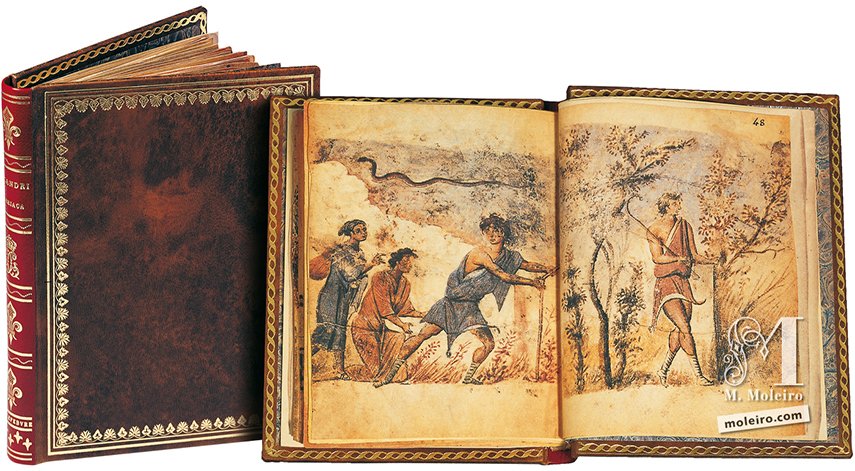
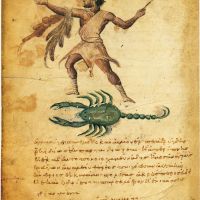
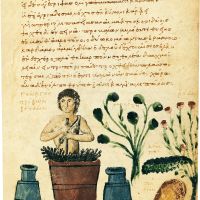
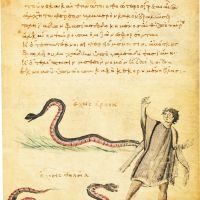
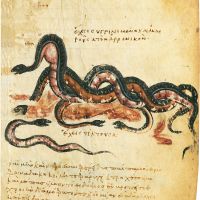
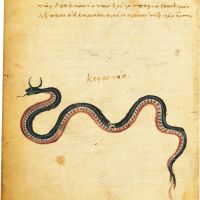
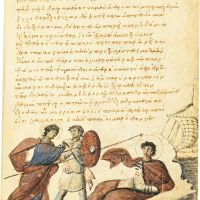
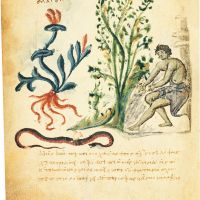
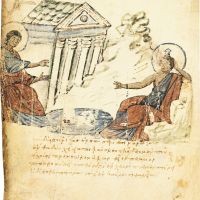
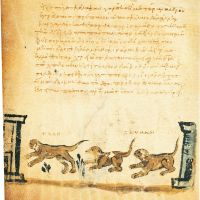
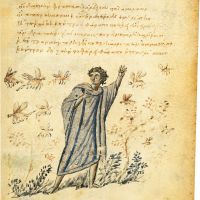
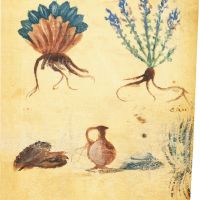
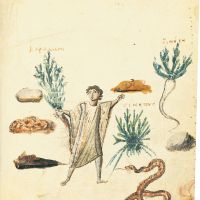
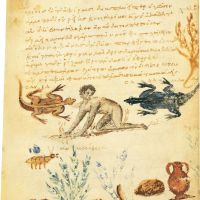
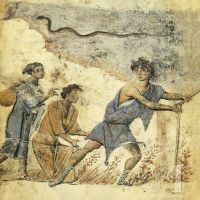
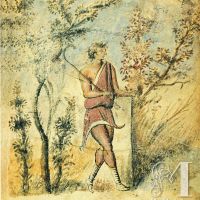
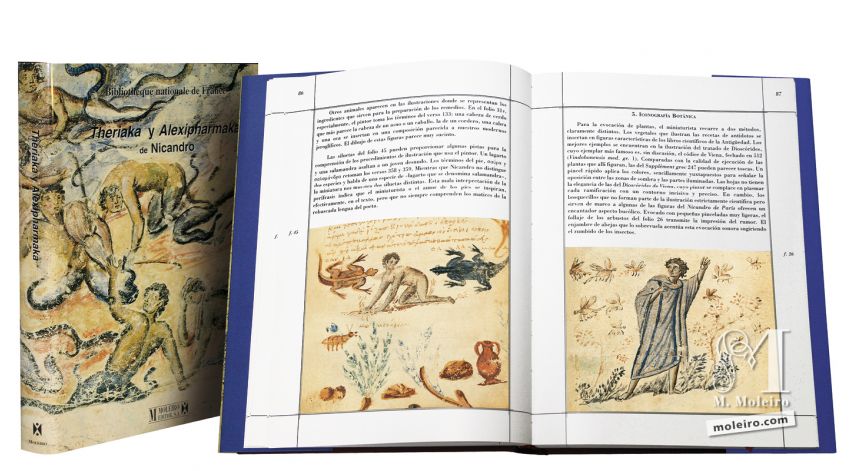
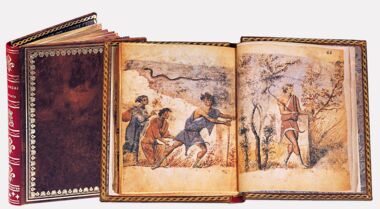
"The miniatures have contributed greatly to the fame of this manuscript. It is the only extant, illustrated example of Nicander’s work and, furthermore, the elegant human figures accompanying the zoological and botanical images endow this small book with its characteristic charm and originality. Forty of the forty-eight folios in the codex feature miniatures that illustrate the treatises about poisons and their antidotes. As was usual in ancient times, the images, without frames or decorative surrounds, interrupt the texts. They are quite faithful to the general structure of the poem containing a mixture of descriptions of animals, antidote formulae based on plants or minerals and digressions evoking mythological tales."

Grégoire Aslanoff
Author of the iconographical study

Theriaka and Alexipharmaka by Nicander

"Unique and unrepeatable first edition, strictly limited to 987 numbered and authenticated copies"

Bibliothèque nationale de France, Paris

PDF Catalogues
Size: 125 x 160 mm.
Date: 10th C.
Supplément grec 247.
96 pages, 41 miniatures.
Bound in marble design, brown leather with red spine.
Leather case.
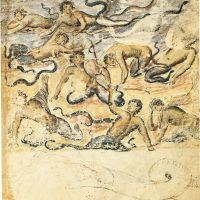
Commentary volume (372 p.).
ISBN: 978-84-88526-30-4
Commentary volume

commentary volume
Contenido:

Del editor al lector

Prefacio
Jean Pierre Angremy (Académie Française, Presidente de la Bibliothèque nationale de France)

Introducción
Alain Touwaide (Consejo Superior de Investigaciones Científicas)

Nicandro y su obra
Alain Touwaide

Estudio codicológico
Christian Förstel (Bibliothèque nationale de France)

La ilustración del Supplément Grec 247
Grégoire Aslanoff (Université de Paris I - Panthéon - Sorbonne)

Los poemas de Nicandro y el Parisinus en las ciencias médicas de Bizancio
Alain Touwaide

Traducción de los Theriaka y Alexipharmaka
Alain Touwaide

Notas de edición y de filología
Alain Touwaide

ISBN: 978-84-88526-29-8
© 2013 M. Moleiro Editor. Travesera de Gracia, 17 | 08021 Barcelona | ES +34 932 40 20 91 | FR +33 09 70 44 40 62 | USA +1 (305) 831 4986 | UK +44 (0) 20 7193 4986 |