DICCIONARIO_dic_inicio
telefono
+34 93 240 20 91

The most prestigious company specialised in the identical reproduction of illuminated manuscripts and atlases
 

The Apocalypse of 1313

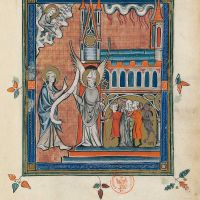
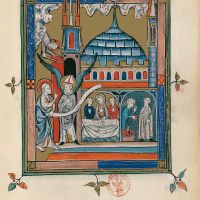
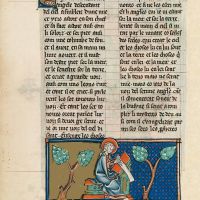
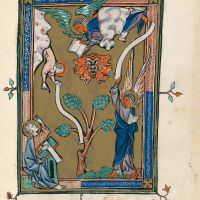
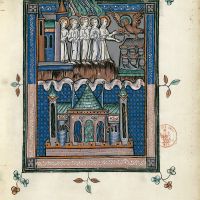
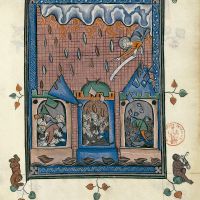
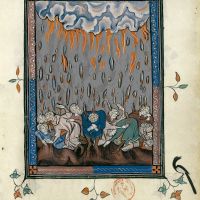
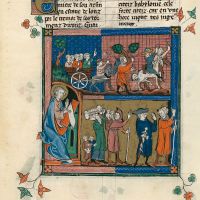
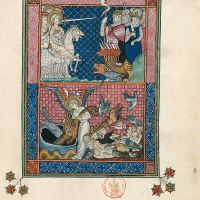
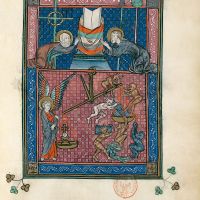
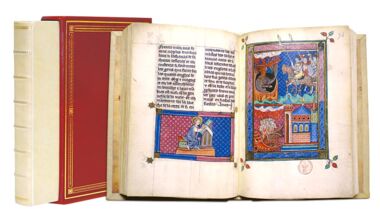
f. 6r, The message to the Church of Ephesus (Revelation 2: 1-7)
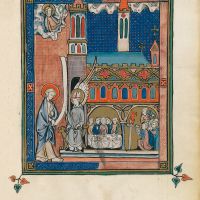
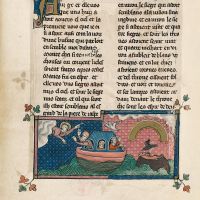
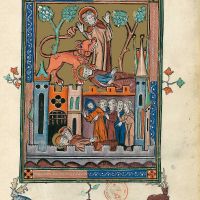
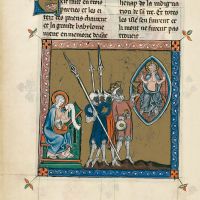
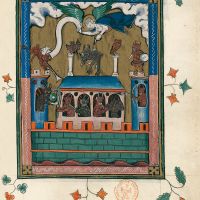
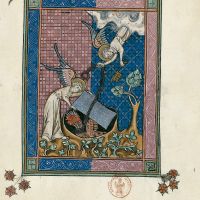
f.7r The message to the Church of Pergamus (Revelation 2: 12-17)
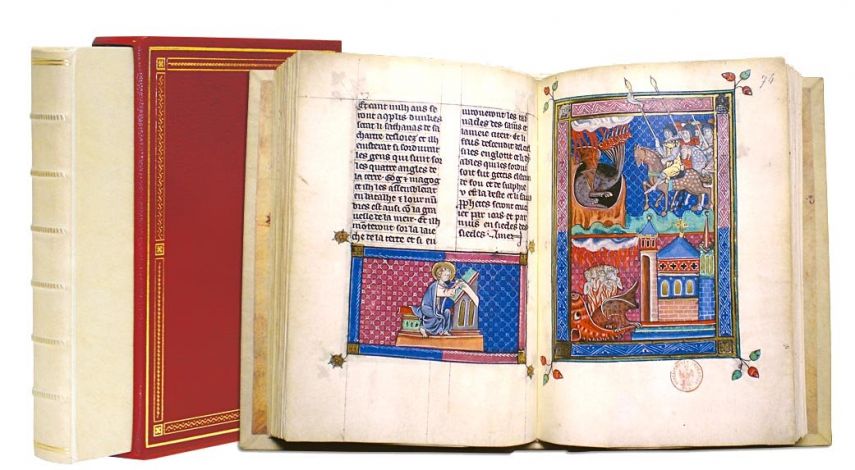
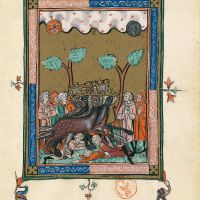
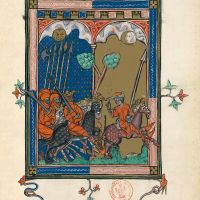
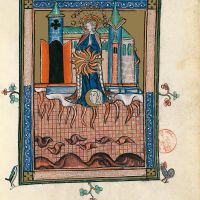
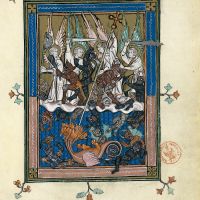
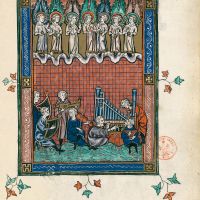
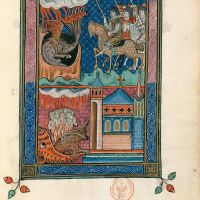
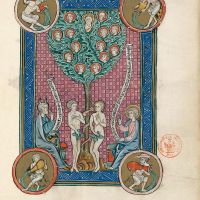
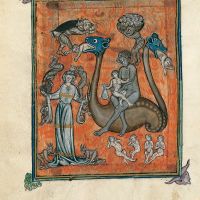
Signed and dated in 1313 by its illuminator, Colin Chadelve, this Apocalypse is a unique creation apparently designed to cater for its patron's demanding requirements. The images in this manuscript are extraordinary in terms of both their abundance and the quality of their pictorial technique. This codex features the longest iconographic cycle of the Book of Revelation of the entire Middle Ages.

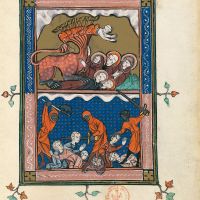
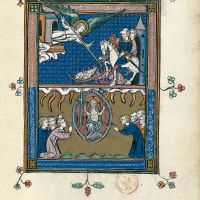
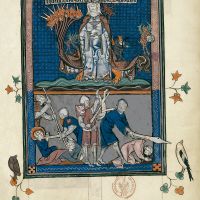
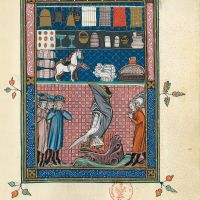
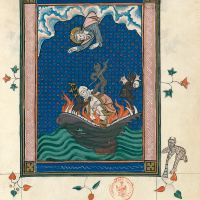
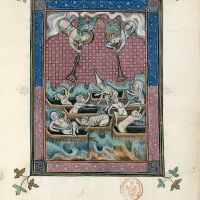
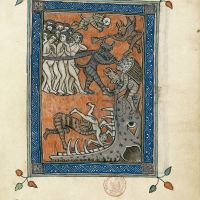
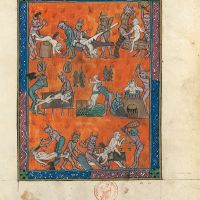
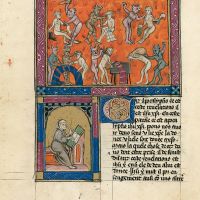
The radiant colours, contrasting gold hues and lavish illustrations of the Apocalypse and Hell also transform this codex into a unique treasure. Today's privileged readers can observe the merciless punishments meted out to the damned in Hell thanks to the wealth of details in the artist's representations of the most horrific and surprising tortures: sinners being flayed, sawn in half, beaten on anvils, cast into cauldrons of boiling water or oil, having their eyes poked out with chisels and tongs... This manuscript differs from other codices depicting Hell, with its horrors and torments, as just another feature: here the artist lays great emphasis on it, giving free rein to his imagination.

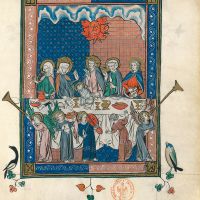
The miniatures, homogenous in style throughout the manuscript, are brought alive by a remarkably dramatic force produced by the gestures of the figures, the liveliness of the scenes, the great colour range and the lavish use of gold.

This Apocalypse is also exceptional because, having very few traces of the Parisian style, it is a rare item amongst the French manuscripts of the early 14th century. Indeed, this Apocalypse is apparently an unusual adaptation of a very popular English Gothic type of book: an extraordinary one of a kind in textual and iconographic terms.

The artist of this manuscript manages to orchestrate four levels of interpretation in a coherent and unprecedented manner. He succeeds in combining the text of the Revelation and the traditional iconographic models and commentaries with his own perception of these texts, thereby giving rise to new meanings.

Experts agree that the Apocalypse of 1313 constitutes an important shift in the Gothic concept of illustrated Apocalypse codices towards a more personal and private prayer book to be used for innermost contemplation and meditation.

The Apocalypse of 1313

«First, unique and unrepeatable edition»
Bibliothèque nationale de France, Paris

PDF Catalogues
Shelfmark: Fr. 13096.Size: ± 220 x 155 mm.Date: 1313.334 pages, 162 miniatures (86 full-page illustrations)illuminated with gold.Full-colour accompanying volume of studies by:Marie-Thérèse Gousset and Marianne Besseyre.

Commentary volume

commentary volume
Contents:

From the editor to the reader

The Apocalypse of 1313

Presentation of the manuscript
Marie-Thérèse Gousset (Ingénieur de recherche, Centre de Recherche sur les Manuscrits Enluminés, BnF)

Colins Chadewe “ordinat” and “enluminat” the manuscript
Marie-Thérèse Gousset

An innovative series of paintings: the teaching of images combining the old and the new
Marie-Thérèse Gousset

“The Hell of Trades” in the Apocalypse of 1313
Marianne Besseyre (Conservateur, Centre de Recherche sur les Manuscrits Enluminés, BnF)

Commentaries on the paintings
Marianne Besseyre
Marie-Thérèse Gousset
 
The commentary and its author and translator
Marie-Thérèse Gousset

Conclusion
Bibliography

ISBN: 978-84-96400-20-7
© 2012 M. Moleiro Editor. Travesera de Gracia, 17 | 08021 Barcelona | ES +34 932 40 20 91 | FR +33 09 70 44 40 62 | USA +1 (305) 831 4986 | UK +44 (0) 20 7193 4986 |