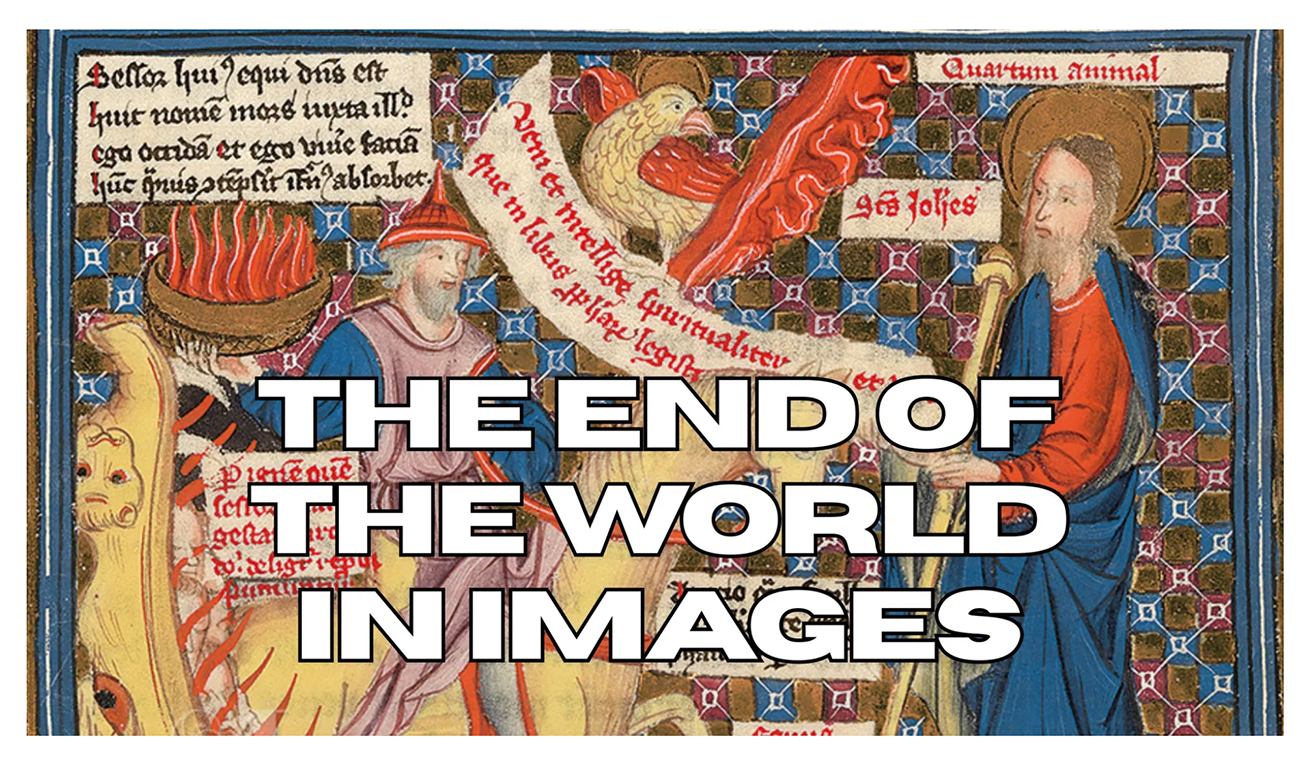
Picture Book of the Life of St John and the Apocalypse is a unique and visually striking example of the picture-book Apocalypse - a distinctive group of medieval manuscripts that present the apocalyptic visions of the Book of Revelation primarily through images. Centred on the visions of St John and often framed by episodes from his legendary life, these manuscripts transform the biblical text into a continuous pictorial narrative. They, as their name implies, are conceived first and foremost as image cycles, guiding the viewer sequentially through John's visions of the end of time.
The picture-book Apocalypse images are typically organised in double registers, with two framed miniatures on a page, creating a steady rhythm that carries the narrative forward. Unlike conventional illustrated Bibles, which feature the complete, continuous text of Revelation, picture-book Apocalypses instead integrate selected biblical passages directly into the images, along with an exegetical commentary traditionally attributed to a ninth-century Benedictine monk, Berengaudus. These texts appear on placards, labels, and speech scrolls embedded within the miniatures, functioning both as narrative cues and interpretative guides.
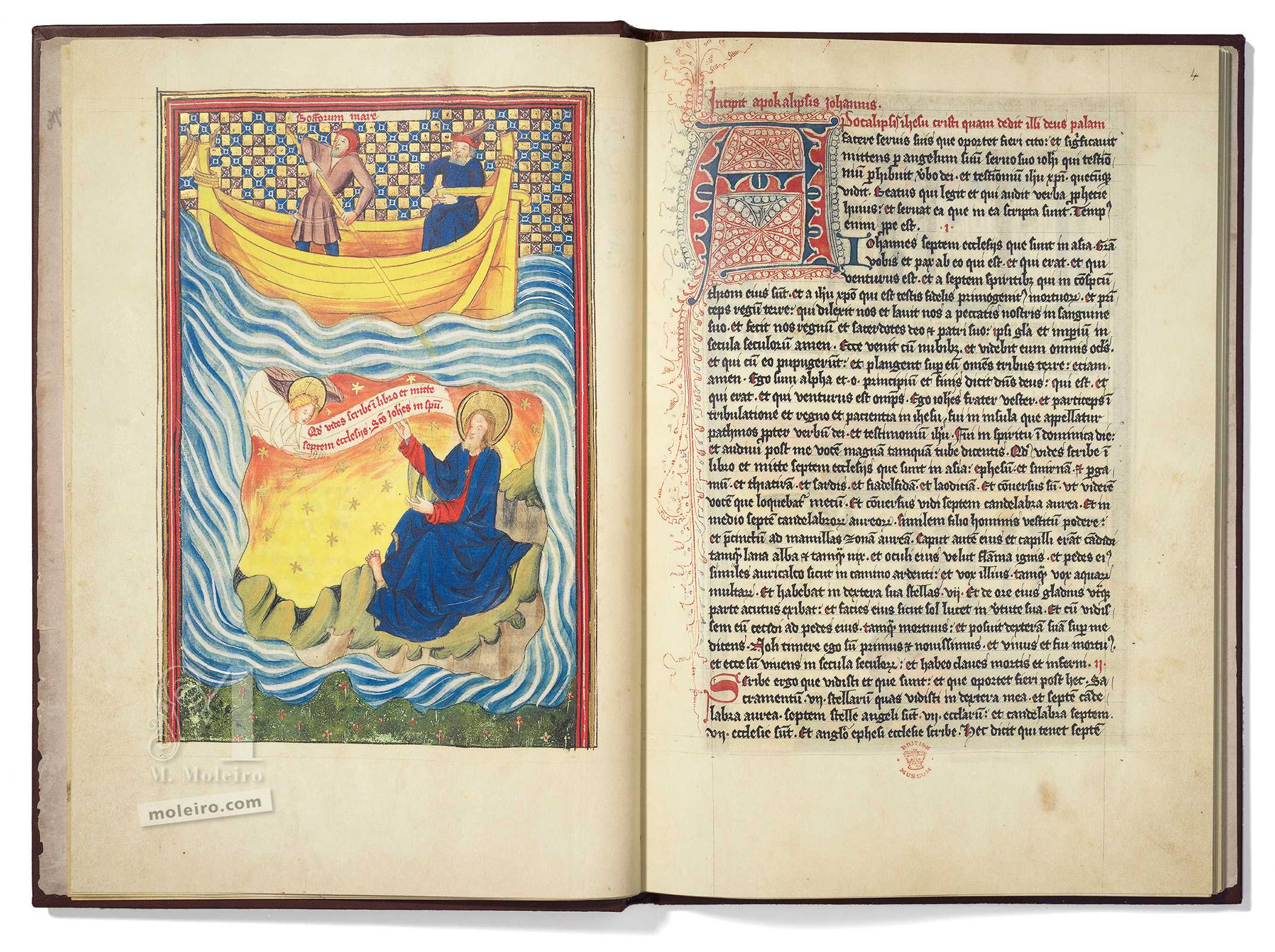
John on Patmos, ff. 3v–4r
Picture Book of the Life of St John and the Apocalypse
Inscriptions play a central role in these manuscripts. Nearly all miniatures include brief labels identifying key figures, as well as longer inscriptions that set forth scenes or convey dialogue. The balance between image, biblical quotation, and commentary varies considerably from scene to scene and from manuscript to manuscript. Some miniatures rely almost entirely on Berengaudus’s commentary, while others omit it altogether, drawing instead on biblical excerpts or focusing on imagery.