Of the strength and courage of one of the daughters of Qaidu
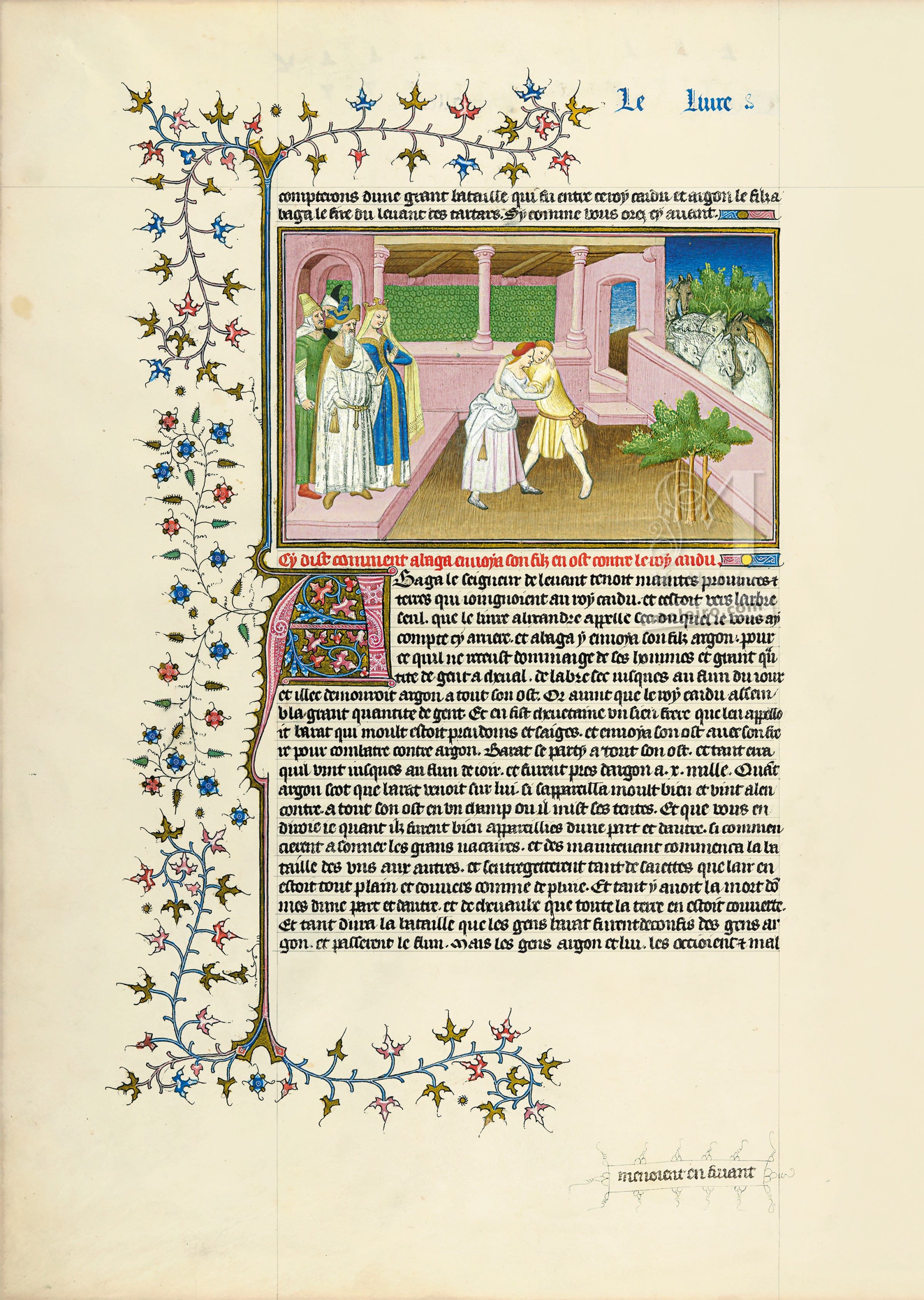
King Qaidu had a daughter called Agiaint, which in Tartar language means "Shining Moon". She was so beautiful and have so much strength and courage that no man in her father's entire kingdom could overpower her; she brought them all to their knees. Her father sought several times to give her a husband, but she would not hear of it. She declared that she would only marry a man who could subdue her through sheer strength. The king agreed to her request; he granted her the privilege of marrying whoever she wished and whenever it pleased her. In fact, Qaidu's daughter was so well built in every limb and so tall and big-boned that she was not far from being a giantess. She had it announced everywhere that, if any young nobleman who wanted to come and try his strength with her succeeded in subduing her, she would take him as her husband, but if she overpowered him, he would forfeit 100 horses to her. Many noblemen's sons arrived to be tested against her and she had won more than 10,000 horses from them, for she could find no one whom she did not overwhelm.
In the year 1280, there arrived in the country a noble young man, son of a rich and powerful king. He was brave, courageous, and strong, and had heard of the young lady's trial. He came to try his strength with her in order to defeat her and marry her; it was his dearest wish, so distinguished and beautiful was she. He too was young, handsome, valiant, and strong. In his father's kingdom, he had found no one capable of resisting him in strength. He had come there, full of courage, and had brought with him a thousand horses, so that if the princess won, she would win a thousand horses at a single stroke, which was no small gain. But the young man was so sure of himself that he thought he would overcome her on the very first attempt. Qaidu and the queen, his wife, privately urged their daughter to let herself be defeated by the young man, for they would have been very happy to see him become their daughter's husband, because he was a nobleman and a king's son. The young woman refused categorically: in no way would she let herself be defeated out of compliance, but if the prince succeeded in beating her at wrestling, she would consent to marry him, as had been agreed and not otherwise.
On the appointed day, everyone gathered at Qaidu's palace, led by the king and queen, to watch the wrestling match. First came the young woman in a tight-fitting coat of samite, then the young man in a coat of sendal. It was a splendid spectacle. Then they came to grips, tussling back and forth, and a long moment passed before either could gain the upper hand over the other; but in the end, the young woman threw the youth to the ground with great valour. Such was his grief and shame that when he was back on his feet he did not linger but left the moment he could with his whole company and returned to his father, in despair at having been thus defeated by a woman - he who had found no man of his strength. He left her the thousand horses that he had brought especially for this contest. Qaidu and the queen, his wife, were deeply upset by this, for they would have loved to see the young man win and take their daughter as his wife. Thus did this sad misadventure happen to him.
From that day forth, Qaidu rode to no feat of arms without his daughter. Indeed, he gladly took her by his side, for among all his knights there was no warrior capable of accomplishing such feats of prowess as she. She would charge into the host of the enemy, snatch men away as though they were birds, and bring them back to her father. And this happened often.
Of the strength and courage of one of the daughters of Qaidu
King Qaidu had a daughter called Agiaint, which in Tartar language means "Shining Moon". She was so beautiful and have so much strength and courage that no man in her father's entire kingdom could overpower her; she brought them all to their knees. Her father sought several times to give her a husband, but she would not hear of it. She declared that she would only marry a man who could subdue her through sheer strength. The king agreed to her request; he granted her the privilege of marrying whoever she wished and whenever it pleased her. In fact, Qaidu's daughter was so well built in every limb and so tall and big-boned that she was not far from being a giantess. She had it announced everywhere that, if any young nobleman who wanted to come and try his strength with her succeeded in subduing her, she would take him as her husband, but if she overpowered him, he would forfeit 100 horses to her. Many noblemen's sons arrived to be tested against her and she had won more than 10,000 horses from them, for she could find no one whom she did not overwhelm.
In the year 1280, there arrived in the country a noble young man, son of a rich and powerful king. He was brave, courageous, and strong, and had heard of the young lady's trial. He came to try his strength with her in order to defeat her and marry her; it was his dearest wish, so distinguished and beautiful was she. He too was young, handsome, valiant, and strong. In his father's kingdom, he had found no one capable of resisting him in strength. He had come there, full of courage, and had brought with him a thousand horses, so that if the princess won, she would win a thousand horses at a single stroke, which was no small gain. But the young man was so sure of himself that he thought he would overcome her on the very first attempt. Qaidu and the queen, his wife, privately urged their daughter to let herself be defeated by the young man, for they would have been very happy to see him become their daughter's husband, because he was a nobleman and a king's son. The young woman refused categorically: in no way would she let herself be defeated out of compliance, but if the prince succeeded in beating her at wrestling, she would consent to marry him, as had been agreed and not otherwise.
On the appointed day, everyone gathered at Qaidu's palace, led by the king and queen, to watch the wrestling match. First came the young woman in a tight-fitting coat of samite, then the young man in a coat of sendal. It was a splendid spectacle. Then they came to grips, tussling back and forth, and a long moment passed before either could gain the upper hand over the other; but in the end, the young woman threw the youth to the ground with great valour. Such was his grief and shame that when he was back on his feet he did not linger but left the moment he could with his whole company and returned to his father, in despair at having been thus defeated by a woman - he who had found no man of his strength. He left her the thousand horses that he had brought especially for this contest. Qaidu and the queen, his wife, were deeply upset by this, for they would have loved to see the young man win and take their daughter as his wife. Thus did this sad misadventure happen to him.
From that day forth, Qaidu rode to no feat of arms without his daughter. Indeed, he gladly took her by his side, for among all his knights there was no warrior capable of accomplishing such feats of prowess as she. She would charge into the host of the enemy, snatch men away as though they were birds, and bring them back to her father. And this happened often.
